Dock Leveler: Complete Guide for Warehouses and Loading Docks
Expert advice for dock levelers to maintain safe and efficient loading operations. Learn about types, specifications, and applications.
What is a Dock Leveler?
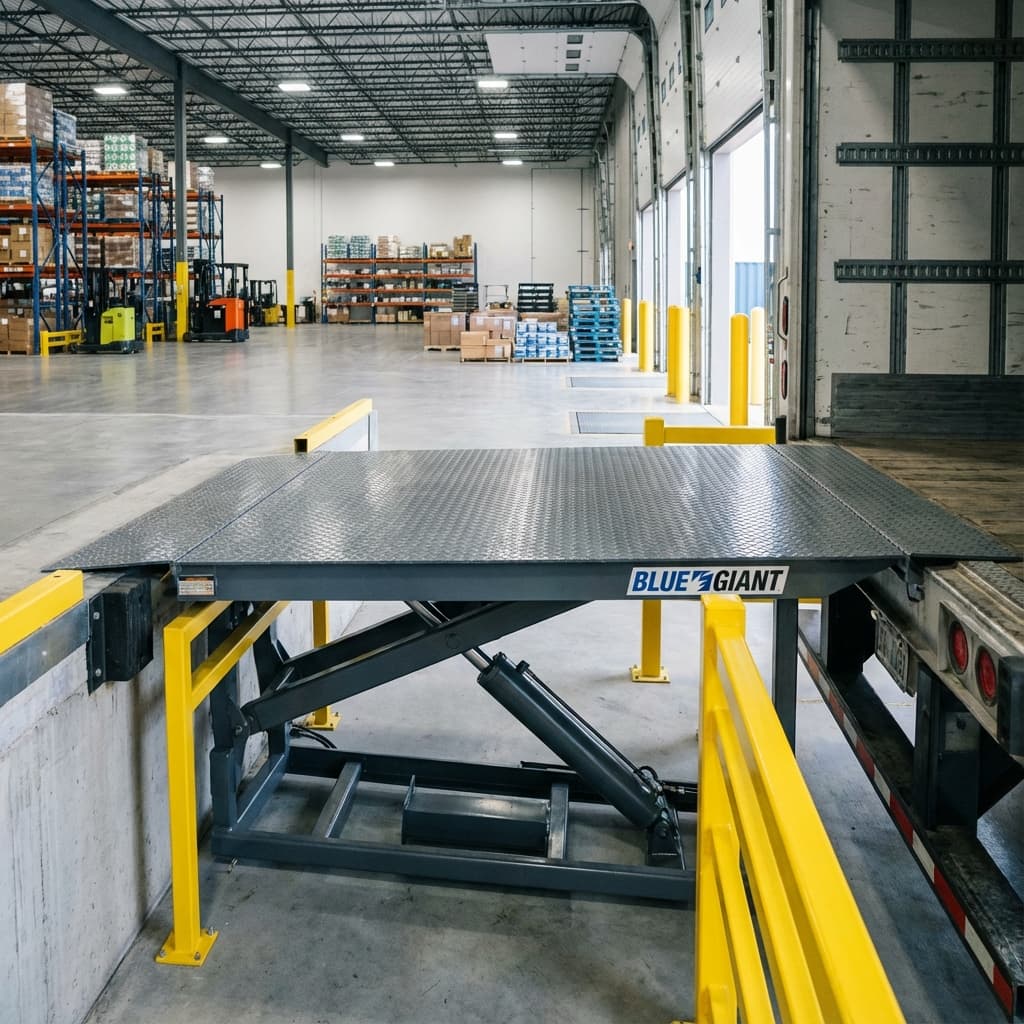
A dock leveler is a crucial piece of industrial material handling equipment designed to bridge the gap and height difference between a loading dock and a truck or trailer bed. This essential equipment facilitates the safe and efficient transfer of goods in warehouses, distribution centers, and manufacturing facilities where continuous loading and unloading operations occur.
Dock levelers create a solid bridge between the dock and the truck, enabling forklifts, pallet jacks, and other material handling equipment to move seamlessly between the two surfaces. They are engineered to accommodate various truck bed heights and types, providing flexibility without needing multiple loading docks.
Key Specifications
Technical Specifications
Load Capacity
5–15 Tons (up to 100,000 lbs for heavy-duty models)
Platform Width
2–3 meters (6–7 feet standard)
Platform Length
2–4 meters (5–12 feet available)
Rise Range
0.5–1.0 meter (12 inches above/below dock height)
Lip Extension
300–600 mm (16–20 inches standard)
Material
Mild Steel / Stainless Steel
The platform is typically constructed from heavy-duty steel safety tread-plate with anti-slip or checker plate surface, reinforced by C-channels or I-beams depending on the capacity requirements. The lip must extend at least 4 inches into the truck per ANSI MH30.1 standards to ensure safe operation.
Types of Dock Levelers
1. Hydraulic Dock Levelers
Powered by a hydraulic system, these offer smooth, push-button automated operation with precise control and high durability. They are ideal for high-volume loading docks and heavy-duty operations due to their efficiency, reliability, and enhanced safety features.
Best For: High-volume facilities, heavy-duty operations, facilities requiring maximum safety and efficiency
2. Mechanical Dock Levelers
Manually operated using a spring-loaded system and pull chains to raise and lower the platform. They are a cost-effective option for facilities with lower traffic volumes but require more physical effort and maintenance.
Best For: Low to medium traffic facilities, budget-conscious operations, facilities with manual handling preference
3. Air-Powered Dock Levelers
These use a low-pressure, high-volume air system or an inflatable airbag to raise and lower the platform via a push-button. They balance efficiency and cost-effectiveness, suitable for moderate-volume facilities, and require minimal maintenance.
Best For: Moderate-volume facilities, operations seeking balance between cost and efficiency
4. Vertical Dock Levelers
Stored upright, these are designed for facilities requiring strict temperature control and cleanliness, as they allow for a complete seal between the trailer and the building, minimizing energy loss. They are typically hydraulically operated.
Best For: Temperature-controlled environments, cold storage facilities, pharmaceutical warehouses
5. Edge-of-Dock Levelers (EOD)
Compact and easy to install, EODs are mounted to the edge of the loading dock and are ideal for smaller loading areas or low-volume facilities with limited working ranges and capacities up to 30,000 lbs. They can be mechanical or hydraulic.
Best For: Small loading areas, low-volume facilities, space-constrained operations
Applications and Industries
Dock levelers are integral to industrial material handling across various sectors:
Warehouses & Distribution Centers
Facilitate continuous flow of goods between trucks and storage areas, optimizing loading and unloading processes for maximum efficiency.
Manufacturing Facilities
Used for receiving raw materials and shipping finished products efficiently, ensuring smooth production workflows.
Logistics Operations
Essential for creating a smooth, safe passage for forklifts, pallet jacks, and other transport equipment, bridging height differences.
Cold Storage Facilities
Vertical dock levelers maintain internal temperatures and hygiene standards in temperature-controlled environments.
Benefits of Dock Levelers
Enhanced Safety
Create a solid bridge between the dock and the truck, reducing the risk of accidents, worker injuries from uneven surfaces, and damage to goods. They help prevent falls, slips, and equipment instability.
Increased Efficiency and Productivity
Enable faster and smoother loading and unloading of trucks, minimizing wait times, streamlining workflows, and improving overall operational productivity.
Adaptability
Accommodate a wide range of truck bed heights and types, providing flexibility without needing multiple loading docks.
Reduced Product Damage
Provide a stable transition, mitigating jolts and tilts, protecting goods—especially fragile or perishable items—during transfer.
Improved Ergonomics
Minimize physical strain on workers, contributing to employee comfort and reducing work-related injuries.
Safety Features
- •Emergency Stop: Immediate shutdown capability for emergency situations
- •Safety Legs: Mechanical support to prevent platform collapse
- •Non-slip Surface: Anti-slip checker plate for secure footing
- •Overload Protection: Prevents operation beyond rated capacity
- •Velocity Safety Stops: Controls descent speed for hydraulic models
Conclusion
Dock levelers are essential equipment for modern warehouses, distribution centers, and manufacturing facilities. By bridging the gap between loading docks and truck beds, they enhance safety, improve efficiency, and protect both workers and goods during loading and unloading operations.
Choosing the right type of dock leveler depends on your facility's specific needs, including traffic volume, load capacity requirements, and budget considerations. Whether you opt for hydraulic, mechanical, or air-powered systems, investing in quality dock levelers represents a commitment to operational excellence and workplace safety.
Need Expert Guidance on Dock Levelers?
Our team can help you select the perfect dock leveler for your facility's specific requirements.
Contact Our Experts